Review: Watercolor Lungs with Flowers Clipart for Stitching
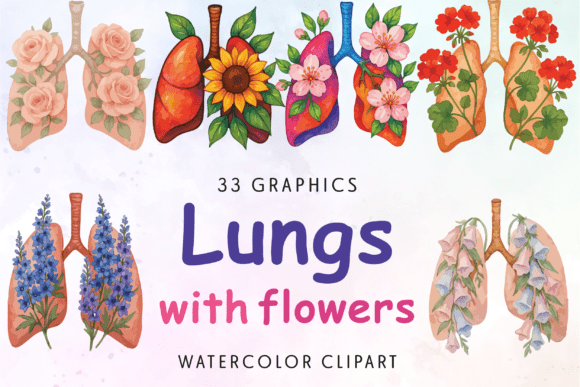
As a designer who spends most of my days digitizing and stitching, I approach new Illustrations with a critical eye. It is not enough for a graphic to look pretty on a screen; it must translate beautifully into thread. When I first opened the Watercolor Lungs with Flowers Clipart bundle, my immediate reaction was one of artistic appreciation. The soft, bleeding edges of the watercolor style combined with the organic shapes of orchids, sunflowers, and tulips create a mood that is both whimsical and deeply grounded. However, moving from a digital Graphics file to a tangible embroidery project requires a different kind of scrutiny. This review breaks down how this specific design asset performs when pushed through the realities of machine embroidery, client expectations, and small business production.
The Aesthetic Appeal and Design Personality
The visual personality of the Watercolor Lungs with Flowers Clipart is undeniably strong. In the world of modern embroidery, there is a growing demand for designs that feel less like rigid vector art and more like hand-painted illustrations. This bundle captures that essence perfectly. The way the flowers intertwine with the anatomical structure suggests growth, healing, and breath—a narrative that resonates deeply with customers looking for meaningful personalized gifts. For an Etsy seller or boutique owner, this thematic depth adds significant value to a handmade product. It moves beyond simple decoration into the realm of storytelling, which is crucial for building brand consistency and customer trust.
When evaluating the layout and detail level, I noticed a balanced composition. The flowers are not merely tacked on; they feel integrated into the lung structure. For a digitizer or a designer preparing a machine embroidery design, this offers a fantastic foundation. The watercolor style implies soft transitions, which in embroidery terms often translates well to varied fill stitch densities or layered satin stitch work to mimic those painterly gradients. The shape is organic, avoiding harsh geometric lines that can sometimes look stiff on fabric, making it an excellent candidate for custom apparel where drape and flow are important.
Real-World Application: The Tote Bag Scenario
To truly test the viability of these design assets, I envisioned a specific real-life scenario: creating a limited run of tote bags for a local wellness studio. The goal was to produce a tote bag design that felt premium yet approachable. Using the Watercolor Lungs with Flowers Clipart as the base, I imagined placing the design centrally on a heavy canvas bag. The larger surface area of a tote allows the intricate details of the orchids and sunflowers to shine without feeling cramped.
In this context, the design's potential is immense. A customer receiving this bag would likely perceive it as a high-end finished product rather than a generic promotional item. The imagery aligns perfectly with themes of yoga, breathing exercises, and holistic health. If stitched with high-quality thread colors that match the watercolor palette—perhaps using variegated threads to enhance the gradient effect—the result could be stunning. However, the success of this embroidery project hinges on execution. The soft edges of the watercolor style must be carefully managed to ensure they do not look muddy when stitched out. This is where the choice of stitch density becomes critical; too dense, and you lose the airy feel; too light, and the fabric shows through, breaking the illusion of the painting.
Navigating Fabric Challenges and Hoop Constraints
While the design is beautiful, practical application reveals certain challenges that every craft business owner must consider. The Watercolor Lungs with Flowers Clipart features delicate details, particularly in the petals of the tulips and the finer veins of the lungs. When working on textured fabrics like Terry cloth for towels or thick fleece for a sweatshirt embroidery project, these small details can get lost. The fabric texture can interfere with the clarity of the stitch, turning fine lines into blobs. Therefore, this design is best suited for smoother fabrics like cotton twill, denim, or high-thread-count linens where the needle can penetrate cleanly.
Another consideration is the hoop size. Depending on the specific file version you obtain from the bundle, the design might be large. If you are attempting to place this on a cap or a pocket, you may run into spatial constraints. Curved surfaces like caps require careful hooping and often a reduction in design size, which can compromise the integrity of tiny elements. If the design is scaled down too much, the running stitch outlines or small fill areas might become indistinguishable. Furthermore, stretchy fabrics present a risk; without a robust stabilizer, the tension of the stitching could distort the organic shape of the lungs, making the final image look warped.
Dark fabrics also pose a question of contrast. The watercolor style often relies on lighter, pastel hues. If stitching directly onto black navy fabric, the design might lack pop unless underlay stitches are used effectively or if the design is adapted as an applique design with a light-colored backing fabric. Always test your embroidery file on scrap fabric that matches your final material before committing to a production run.
Commercial Viability and Professional Presentation
For commercial embroidery projects, the Watercolor Lungs with Flowers Clipart offers a unique selling point. In a market saturated with generic monograms and standard motifs, this illustration stands out. It appeals to a niche audience interested in anatomy, nature, and artistic expression. This specificity can drive higher engagement on social media and increase the perceived value of your small shop product. Whether you are creating holiday embroidery gifts, baby embroidery for a nursery, or printed mockup previews for an online store, the visual impact is strong.
However, professionalism dictates that you verify the licensing terms before selling. Since this is a collection of Illustrations and Graphics, ensure that the license permits commercial use for physical goods. Some creators allow personal use only, while others offer extended licenses for Etsy listings and boutique branding. Additionally, check the available file formats. A true digital embroidery file should come in formats compatible with major machines (like PES, DST, EXP), but if this bundle provides only image files (PNG, JPG), you will need to digitize it yourself or hire a professional. Never assume an image file is ready to stitch; the difference between a raster image and a proper embroidery file is the difference between a failed stitch-out and a masterpiece.
Final Designer Notes for Success
To get the best results from the Watercolor Lungs with Flowers Clipart, treat it with the respect a complex illustration deserves. Start by stitching a test sample on a similar weight fabric to your final product. Pay close attention to the thread color selection; try to match the watercolor tones as closely as possible, perhaps blending shades to achieve that painted look. Inspect the small details after washing; ensure the design holds up to frequent laundering if it is intended for custom apparel like t-shirts or aprons.
Ultimately, this design bundle is a powerful tool for creative entrepreneurs who understand the nuances of their craft. It bridges the gap between digital art and tactile tradition. When handled with care regarding fabric choice, stabilization, and sizing, the Watercolor Lungs with Flowers Clipart can elevate a simple embroidered patch or pillow cover into a piece of wearable art that customers will cherish. It is a reminder that in our industry, the right image, paired with skilled execution, creates not just a product, but an experience.