Review: Orange Marigold Flowers with Green Leaves for Embroidery
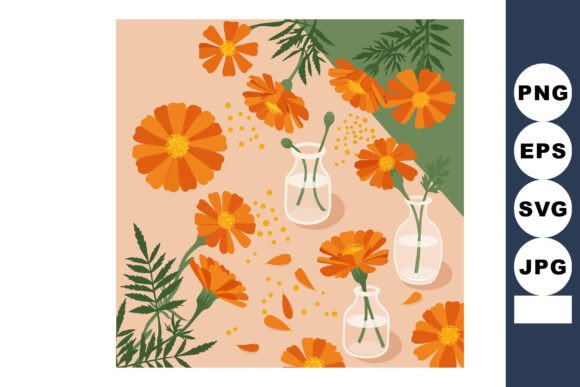
As a designer who spends more time staring at stitch maps than most people care to admit, I approach every new Illustrations pack with a critical eye. It is not enough for a graphic to look pretty on a screen; it must survive the translation from vector lines to physical thread. Recently, I evaluated the Orange Marigold Flowers with Green Leave set, specifically looking at its potential for real-world embroidery project execution. The initial visual is undeniably cheerful, featuring vibrant orange blooms arranged in glass vases against a soft peach backdrop. However, my job is to determine if this Graphics asset holds up when put under the needle.
First Impressions and Design Personality
The moment you open the file, the mood is established. This is not a somber or ultra-modern minimalist piece; it is warm, inviting, and distinctly domestic. The arrangement of marigolds in glass vases suggests a farmhouse aesthetic or a bright spring collection. For an embroidery designer, the shapes are promising. The petals have enough definition to allow for varied stitch types, while the leaves offer a nice contrast in tone. The "glass vase" element is the trickiest part of the composition. In a flat machine embroidery design, representing transparency requires careful planning of negative space and highlight placement. If digitized correctly, this could look stunning; if done poorly, it will just look like a block of blue or grey thread.
The color palette is naturally harmonious. Orange and green are complementary, and the peach background ties them together softly. This makes the design versatile for seasonal transitions, working equally well for late summer harvest themes or early spring decor. When I visualize this as a finished product, I see it fitting perfectly on home goods where warmth is a selling point.
Real-World Application: The Tote Bag Scenario
To truly test the viability of this design, I imagined a specific client request: a custom order for a local farmer's market vendor needing branded tote bag design options. She wanted something that felt handmade but professional. The Orange Marigold Flowers with Green Leave jumped out as a candidate.
In this scenario, the design would likely be stitched onto a heavy canvas tote. The sturdy fabric provides the necessary support for the potentially dense areas of the flower petals. The vibrant orange would pop beautifully against a natural beige or cream canvas, creating high visibility for the brand. The glass vase element adds a touch of sophistication, elevating the bag from a simple grocery carrier to a boutique accessory. Customers browsing the stall would likely be drawn to the cheerfulness of the marigolds, associating the brand with freshness and organic quality. For an Etsy seller or small shop owner, this kind of visual appeal directly translates to buyer engagement.
Beyond tote bags, this design screams potential for kitchen towel sets or aprons. The floral theme is classic for culinary textiles. Imagine a set of three towels, each featuring a slightly different arrangement from the bundle, hung in a sunlit kitchen. The durability of the stitch work would be key here, as these items face frequent washing. The simplicity of the vase shape suggests it could handle the agitation of a wash cycle better than overly intricate botanical illustrations.
Technical Considerations for Stitching
While the artistic merit is high, we must discuss the technical realities of turning this digital embroidery file into a physical object. Since the source files provided are SVG, EPS, JPG, and PNG, it is crucial to remember that these are vector illustrations, not pre-digitized embroidery files. You cannot simply load an SVG into your machine and expect perfect results without proper digitizing software or a professional digitizer.
If you are converting this yourself, pay close attention to stitch density. Marigold petals can become very puffy if the fill is too dense, leading to thread breaks or fabric puckering. A mix of satin stitch for the petal edges and a lighter fill stitch for the centers might yield the best texture. The green leaves should utilize a directional fill to mimic natural vein growth, adding realism to the handmade product.
Be cautious with the glass vase details. On dark fabrics, you may need to use a running stitch outline rather than a solid fill to maintain the illusion of transparency. Also, consider the hoop size. Depending on the complexity of the full bouquet, this design might require a large hoop (at least 5x7 inches) to capture all the details without cramming the stitches. Always test the design on scrap fabric first, ideally the same weight and weave as your final material.
Fabric Choices and Limitations
This design shines on stable, woven fabrics like cotton twill, linen, or canvas. These materials provide the structure needed for the floral elements to sit flat and crisp. However, exercise caution when applying this to stretchy knits, such as those used for sweatshirt embroidery or baby clothes. The density of the flowers could cause the fabric to pucker or distort over time. If you must use it on a sweatshirt, a substantial cut-away stabilizer is non-negotiable to support the weight of the thread.
For baby embroidery, comfort is paramount. The back of the stitching must be clean and soft. The glass vase element, if filled heavily, might feel scratchy against sensitive skin. In such cases, consider simplifying the vase or using a softer thread blend. Similarly, avoid using this complex design on curved surfaces like caps unless you have significant experience with 3D puff techniques or specialized cap framing, as the multiple elements may not align correctly on the curved panel.
Commercial Viability and Brand Consistency
For commercial embroidery professionals, consistency is king. Before listing this as a small shop product, verify the licensing terms associated with the Illustrations. Can you sell unlimited finished goods? Are there restrictions on digital resale? Assuming the license permits commercial use, this design offers strong branding potential. The cheerful mood aligns well with businesses focused on wellness, gardening, home decor, or organic foods.
Using this design across a range of products—from embroidered patch applications on denim jackets to pillow cover accents—can create a cohesive collection. The distinct orange and green colorway ensures brand recognition. When customers see that specific shade of marigold orange, they should immediately think of your shop. This level of visual consistency builds trust and encourages repeat purchases.
Final Verdict for Makers
The Orange Marigold Flowers with Green Leave illustration is a robust asset for the creative entrepreneur who understands how to bridge the gap between vector art and thread. It is not a "plug-and-play" solution for beginners without digitizing skills, but for those willing to invest the time in proper setup, the rewards are significant. The design offers a perfect balance of detail and simplicity, making it suitable for everything from holiday gifts to boutique merchandise.
My advice is to start small. Create a printable mockup to visualize the scale, then stitch a sample on a neutral fabric. Check the thread colors under different lighting conditions to ensure the orange remains vibrant and does not muddy. If you take the time to respect the technical requirements of the design, it has the potential to become a staple in your catalog of design assets, bringing a touch of sunny cheer to every personalized gift you create.